
Talkin’ Trash on KTLA : How To Reduce Your Waste in a few Simple Ways
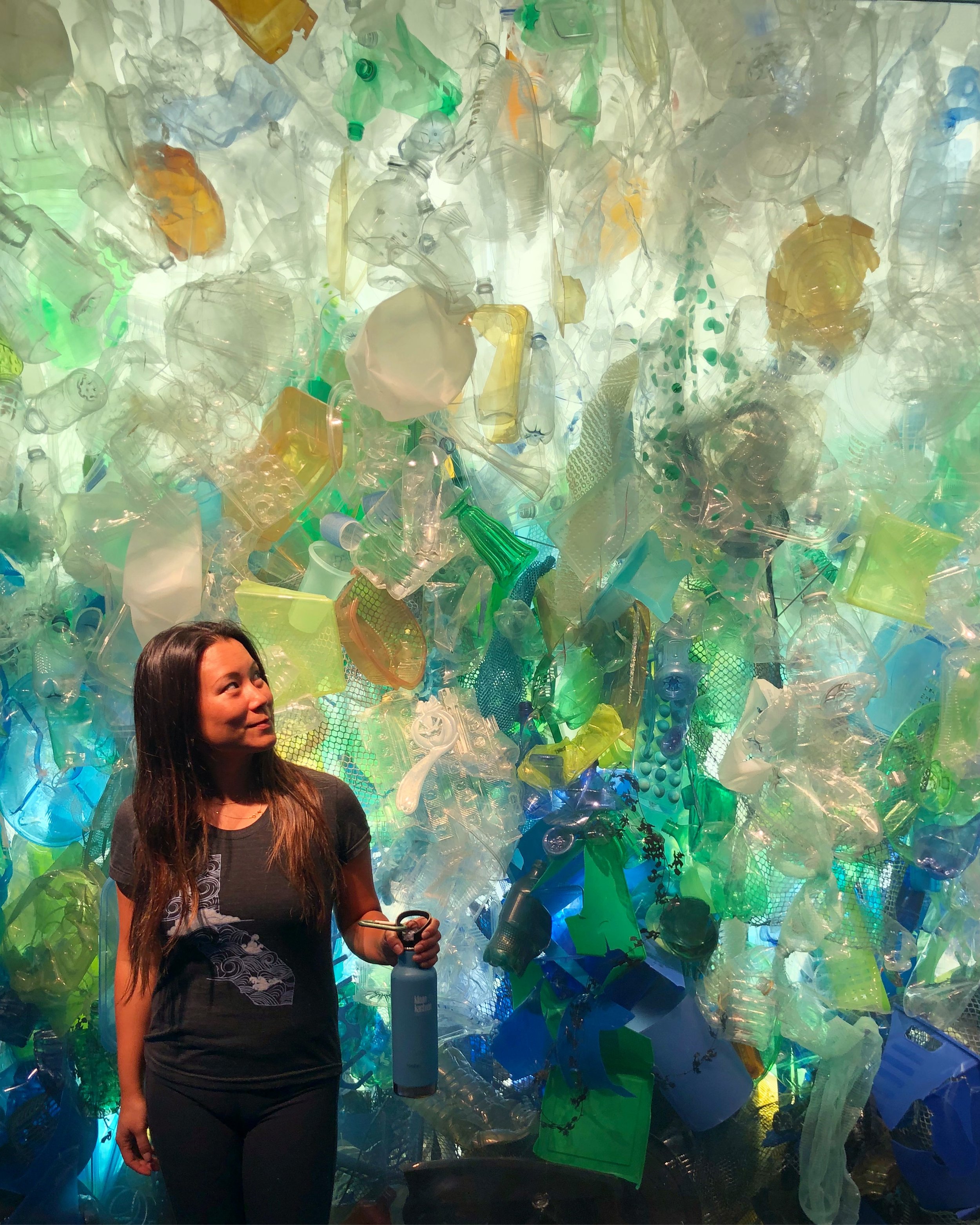
Angela Sun looking up at a Plastic Pollution installation, Monterey Bay Aquarium
Earth Month is often framed around what we should buy—the newest bamboo straw, the trendiest tote, or the latest "eco-friendly" gadget. But true sustainability isn't just about what we bring into our homes; it’s about being responsible with the things we no longer need.
The Problem with "Wish-Cycling"
Most of us want to be more earth-conscious, but we often fall into the trap of "wish-cycling." It’s that hopeful desire to recycle combined with an "out of sight, out of mind" mentality where we throw everything into the blue bin and hope for the best.
The reality? That habit is actually hurting our environment. In the U.S., only about 5-6% of plastic waste is actually recycled. The rest? It’s rejected by curbside programs and ends up in landfills, incinerated, or exported.
I recently performed a "Trash Audit" on my own life, and even as an environmental journalist and filmmaker who literally made a documentary about ocean plastics (Plastic Paradise), I was shocked. Even when you're trying your best, avoiding single-use plastic is a monumental task.
If you’re ready to stop wishing and start actually reducing your waste, here is how you can handle the "hard-to-recycle" items in your life.
Solving the ‘Curbside Reject’ Problem with Ridwell
Most curbside bins reject "plastic film"—things like bubble mailers, grocery bags, and frozen food packaging. These materials jam up machinery at standard recycling centers.
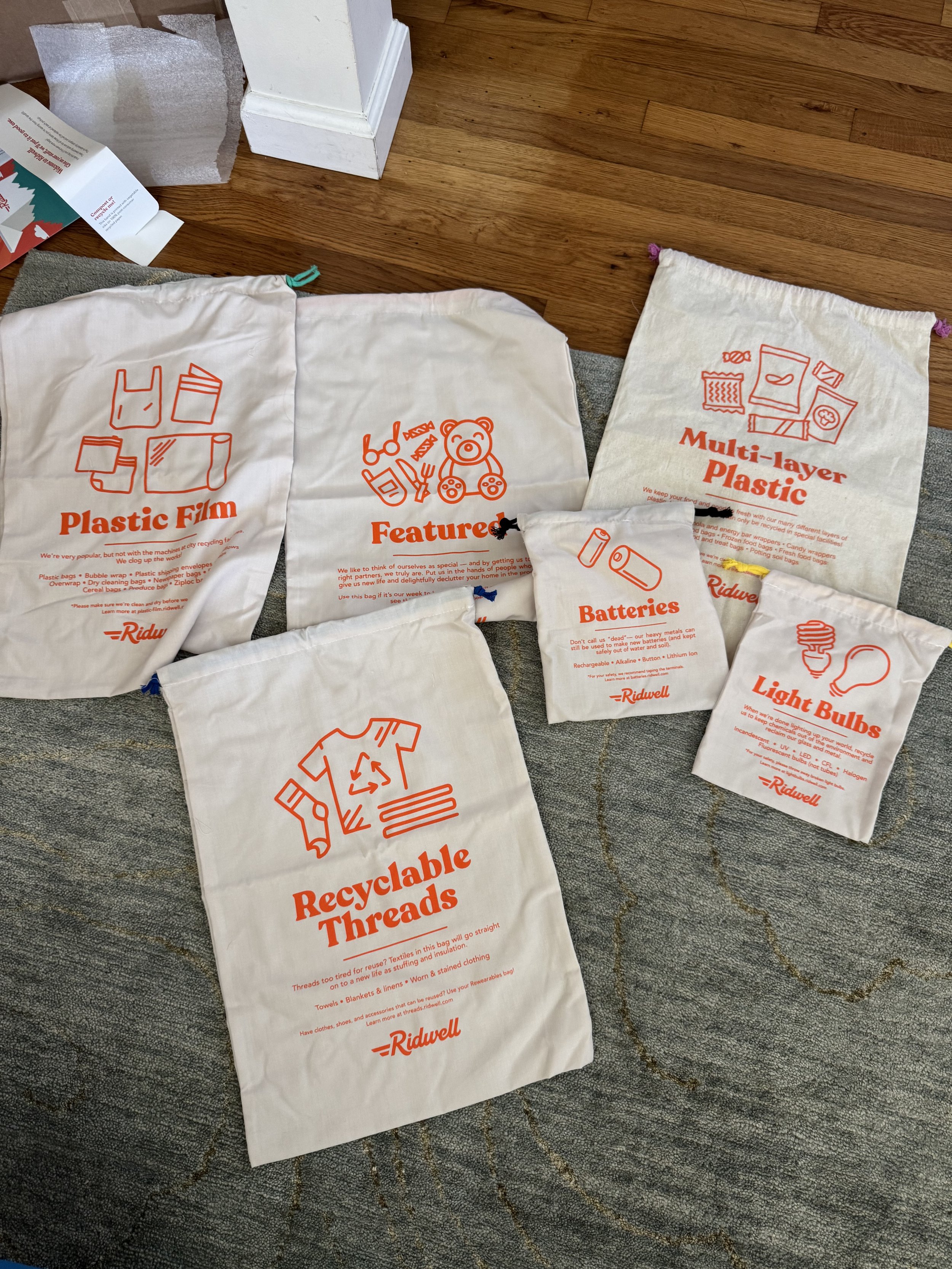
That’s where Ridwell comes in. It’s a doorstep pickup service that takes the guesswork out of the equation. When you sign up, they provide specialized bags for the tricky stuff:
Plastic Film: Bubble mailers, plastic wrap, and bags.
Threads: Old clothes and textiles that aren't fit for donation.
Lightbulbs & Batteries: Items that definitely shouldn't be in the trash.
Pro Tip: Use the Sortwell app. You just snap a photo of a questionable piece of plastic, and the app tells you exactly which Ridwell bag it belongs in. No more guessing.
2. Why E-Waste Matters: Homeboy Electronics Recycling
We are more connected to our electronics than ever, but tech moves fast. What do you do with that drawer of old charging cables, cracked phones, or ancient printers?
I recommend Homeboy Electronics Recycling. They are a social enterprise part of the well-known Homeboy Industries, providing job opportunities for people re-entering the workforce after incarceration. They offer:
Mail-in kits for computers, phones, and cords.
Scheduled pickups for larger hauls.
Community drop-offs at their South Gate headquarters for appliances and TVs.
3. Closing the Loop on Food Waste (SB 1383 Compliance)
Food waste is the single largest material in our landfills, making up 30-40% of what we throw away. While California’s SB 1383 law now requires us to separate organic waste into green bins, the "yuck factor" of a smelly kitchen pail is a real barrier for many.
Transforming Scraps with the Mill Food Recycler
I’ve been using the Mill Food Recycler, and it’s a total game-changer. After home composting for a few years, I was so excited to have something that wasn’t an eyesore in the kitchen. It looks like a sleek kitchen bin, but it quietly dehydrates and grinds your food scraps (even things like chicken bones or rinds) into dry, shelf-stable grounds overnight. It’s super quiet, doesn’t smell, and takes weeks to fill up.
What do you do with the grounds?
Add them to your own garden or compost.
Ship them back to Mill to be turned into chicken feed! How cool is that?
Drop them off at an LA Compost booth at your local LA farmers market. They are at 25 Farmers Markets around LA. They ensure those nutrients stay local, going back to community gardens and schools to grow more food.
Make the Switch Today
Sustainability isn't about being perfect; it’s about using the right tools to close the loop. If you want to start your own journey, I’ve partnered with these organizations to help you get started:
Ridwell: Get a FREE month of porch pickup by visiting ridwell.com/ktla.
Mill: Use code 'KTLA' at mill.com to get $75 off your food recycler.
Let’s stop wish-cycling and start being the responsible stewards our planet needs.
About Angela Sun
Angela Sun is an award-winning investigative journalist, filmmaker, and television host dedicated to environmental advocacy and sustainable storytelling. As the creator of the acclaimed documentary Plastic Paradise, Angela has spent over a decade uncovering the impact of single-use plastics on our oceans. A regular contributor to KTLA Morning Weekend and a veteran broadcaster with experience at ESPN and Fox Sports, she blends her passion for wellness, sports, and the planet at ChasingASun.com. When she isn't "talkin' trash," you can find her diving at the Great Barrier Reef or exploring the intersection of "glow-cations" and conservation.